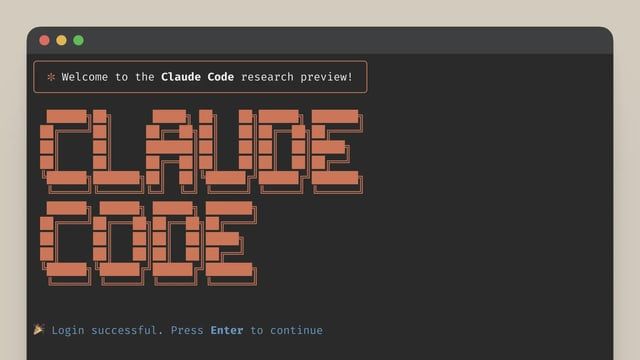
Gemini CLI: Google's Bet on the Developer Terminal
Google dropped an open-source terminal agent and embedded it directly in the developer toolchain. The race for the command line just started.

Why this is a more significant move than it looks
Google shipping a terminal AI agent is not a surprising product decision. Google has a large developer audience, substantial model capabilities, and obvious incentives to compete with Anthropic's Claude Code. What is more interesting is how they shipped it: open source, with native MCP support from day one, in a category that is still developing its conventions and expectations. That set of choices is a strategic declaration, not just a feature release.
Open-sourcing a developer tool from Google carries a different weight than open-sourcing from a startup. The codebase will get serious scrutiny, serious contribution, and serious adoption by organizations that would never deploy a closed-source terminal agent. It also means the development roadmap is visible and community-influenced rather than purely driven by Google's internal priorities. For developers who have had complicated relationships with Google's tendency to deprecate products, the open-source framing provides a meaningful continuity guarantee.
The timing — about a month after Claude Code went generally available at Anthropic's developer conference — makes the competitive context explicit. Google was not going to cede the terminal AI development category to Anthropic. But the way they responded, with open source and protocol compatibility rather than proprietary differentiation, signals something about how they read the market. The terminal AI category is better served by growing the pie than by walling off a corner of it.
The MCP-native decision and what it validates
Gemini CLI shipping with native MCP support was the most strategically significant detail in the launch announcement, and it received less attention than it deserved. MCP was created by Anthropic and had been live for about seven months at the time of the Gemini CLI launch. By building MCP support into the Gemini CLI from day one rather than implementing a parallel system, Google effectively validated the protocol as the cross-vendor standard for AI tool connectivity.
That validation matters for everyone building integrations. Before Gemini CLI, MCP was the right technical choice but carried the strategic risk of being an Anthropic-controlled specification. With Google's native adoption, the protocol cleared the threshold from 'interesting Anthropic initiative' to 'the thing both major terminal AI agents support.' That threshold change has real implications for the cost-benefit calculation of building MCP-based connectors.
For developers and enterprise teams, MCP support in both Claude Code and Gemini CLI means that connector work has genuine portability. An MCP server built to expose an internal system to Claude Code will work in Gemini CLI without modification. That portability reduces the integration investment risk substantially and makes the MCP ecosystem a more rational place to invest engineering resources.
- MCP connector work has genuine cross-vendor portability.
- Build integrations once — they work in any MCP-compatible terminal agent.
- Repository context and project configuration become shared infrastructure.
- The protocol choice is now validated by the two major terminal AI vendors.
How Gemini CLI differs from Claude Code in practice
Gemini CLI and Claude Code are in the same category but they are not the same tool. Claude Code's primary advantage is its deep integration with Claude's overall capability profile — particularly strong for long, multi-file refactors, architectural reasoning, and contexts where extended thinking about complex problems produces better outcomes. The Anthropic developer ecosystem around CLAUDE.md, project configuration, and multi-agent patterns is also more mature.
Gemini CLI's advantages cluster around Google's strengths: deep integration with Google Cloud infrastructure, multimodal capabilities from day one given Gemini's native multimodality, and the breadth of the Google developer ecosystem for teams already operating on GCP. For organizations with significant Google Cloud deployments, Gemini CLI's native integration with those services is a genuine workflow advantage that Claude Code requires additional configuration to approximate.
In practice, the teams we see getting the most leverage from terminal AI tools are not treating this as an either/or choice. They are experimenting with both, observing which produces better outcomes for which task categories in their specific environment, and building their project configuration to be portable enough to use either depending on the task. That is a healthy approach for a category that is still maturing.
What this means for teams making tooling decisions
The practical takeaway from Gemini CLI's launch is that the terminal AI development category has achieved critical mass. When both Anthropic and Google are shipping serious, production-ready terminal agents with open-source commitments and shared protocol support, the category is not going away and the core conventions are reasonably stable to invest in.
For teams that have been waiting to commit to terminal AI tooling until the category stabilized, this is a reasonable moment to stop waiting. The investment in project configuration, team conventions, and MCP-based connectors made today will be useful regardless of which specific tools the team ends up preferring in two years. Build for the protocol and the workflow patterns, not for any single vendor's current feature set.
Source signals
Official announcements behind this article.
June 25, 2025
Google – Gemini CLI: your open-source AI agent
Launched Gemini CLI as an open-source terminal AI agent with built-in MCP extensibility.
July 17, 2025
Google – New in Gemini Code Assist: Agent Mode and IDE enhancements
Expanded Gemini's developer surface from single-file assistance toward codebase-aware, multi-file execution.