Claude Code at $2.5B: The Terminal AI Shift Is Real
Nine months after going generally available, Claude Code is past the point of being a developer curiosity. The numbers and the workflow changes are real.
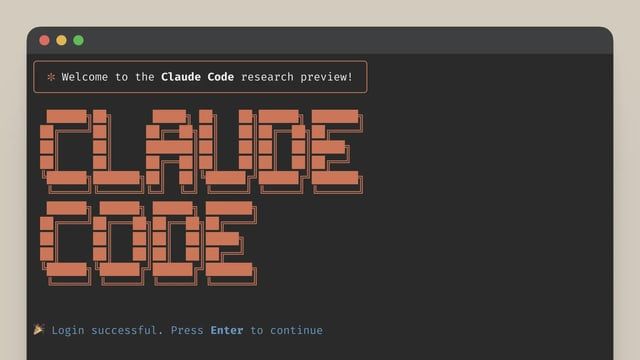
The numbers tell a story about where AI is actually being used
Claude Code crossed $1B in annualized run-rate revenue roughly six months after going generally available in May 2025. By early 2026, that number had grown to approximately $2.5B. To put that in context: Anthropic's entire revenue base was reported at around $1B annually just a year prior. Claude Code alone now runs at more than double that figure and it is a single product within a broader platform.
Those are not numbers that come from demos and trials. At $2.5B run-rate you are talking about production workflows at real engineering organizations, with real accountability for reliability and output quality. That scale forces the product to be genuinely useful in a way that no amount of benchmark performance or demo impressiveness can substitute for. It is the most credible signal we have that the terminal-native AI thesis is not just a developer subculture preference — it is how a large and growing segment of the software industry is choosing to work.
The Bun acquisition that came alongside the $1B announcement is also worth understanding. Bun is a fast JavaScript runtime that is already widely used in the developer community. Anthropic acquiring it signals that the company is investing in the underlying infrastructure that Claude Code runs on, not just the AI layer on top. That is a vertical integration move — owning more of the stack that makes the developer experience fast and reliable.
What actually changed in developer workflows
The most consistent thing we hear from engineering teams that have seriously adopted Claude Code is that the context model changed more than the autocomplete quality. Before terminal-native AI tools, AI assistance in development meant pasting code snippets into a chat interface, explaining the surrounding context manually, and then translating the response back into the actual file. That workflow is fundamentally limited by the cognitive overhead of context translation.
Claude Code changes the frame because it operates inside the repository. It knows which files exist, what they contain, how they relate to each other, what the build system does, and what the tests currently say. When you ask it to fix a bug, it can look at the actual call sites, the actual test failures, and the actual surrounding code rather than a manually curated excerpt. That is a qualitative difference in the kind of work it can do reliably.
The second shift that does not get talked about enough is project-level configuration. CLAUDE.md files — project-specific instruction files that travel with the repository — are becoming a genuine engineering primitive for teams that use Claude Code heavily. They encode conventions, constraints, preferred patterns, and critical context once at the team level rather than requiring every developer to explain the project's quirks in every prompt session. The compounding effect of that over hundreds of sessions across an engineering team is substantial.
Multi-file and multi-session work is also maturing. The early limitation of terminal AI tools was that they were effectively single-session, single-context tools. You could not easily resume a task or have multiple agents working in parallel on related problems. Those limitations are eroding, and the teams pushing on them most aggressively are the ones seeing the most dramatic productivity gains.
- Whole-repo context replaces manually pasted snippets.
- Shared CLAUDE.md files encode team conventions once rather than per-session.
- Test and build output become part of the feedback loop in real time.
- Multi-file edits happen in a coordinated pass, not file by file.
Where it still breaks down
The honest version of this story includes the failure modes, and there are real ones. Long, multi-hour tasks still require active context management discipline. Without intentional structure, the context window fills with low-signal history — verbose tool output, intermediate reasoning that resolved itself, superseded notes — and the agent starts making decisions based on stale or contradictory information. The model does not automatically know what to forget. That is a human architecture responsibility, not a product bug.
Parallel agent workflows on the same codebase create coordination problems that the tooling does not yet fully solve. When two agents are editing related files simultaneously, they can produce conflicting changes that require careful reconciliation. This is a solvable problem and the community is developing conventions around it, but teams running sophisticated multi-agent setups need to invest in workflow design, not just tooling adoption.
Security and permission boundaries are also an area where passive inheritance is not sufficient. Claude Code inherits the permissions of the shell it runs in. If that shell has broad access to production systems, sensitive credentials, or critical infrastructure, the blast radius of an incorrect action is correspondingly large. Teams deploying Claude Code at scale need explicit permission scoping as a first-class concern, and most teams we have encountered are still catching up to that requirement.
What the next stage looks like
The trajectory from here points toward deeper runtime integration, better multi-agent coordination, and more sophisticated context management primitives. Anthropic's acquisition of Bun suggests that performance and toolchain fidelity are being treated as genuine product investments rather than assumed dependencies. The developer experience gap between Claude Code and a well-configured traditional IDE setup is closing from both ends.
For teams still on the sidelines, the question has shifted. A year ago it was reasonable to ask whether terminal-native AI was mature enough for serious adoption. At $2.5B run-rate with major engineering organizations betting workflows on it, the question is now about implementation quality rather than category viability. The teams that invested in solid project configuration and workflow design early are already substantially ahead, and that gap will compound as the tools improve around the workflows they have built.
Source signals
Official announcements behind this article.
November 2025
Anthropic – Anthropic acquires Bun as Claude Code reaches $1B milestone
Marked Claude Code crossing $1B run-rate roughly six months after GA, alongside a strategic infrastructure acquisition.
May 22, 2025
Anthropic – Code with Claude Developer Conference
The GA launch event where the terminal-native AI development narrative was first articulated publicly.