OpenClaw: Steinberger's Bet on AI That Runs Locally
The PSPDFKit founder's open-source personal agent is a small project with a big thesis — that the best AI assistant runs on your hardware and talks to your apps directly.
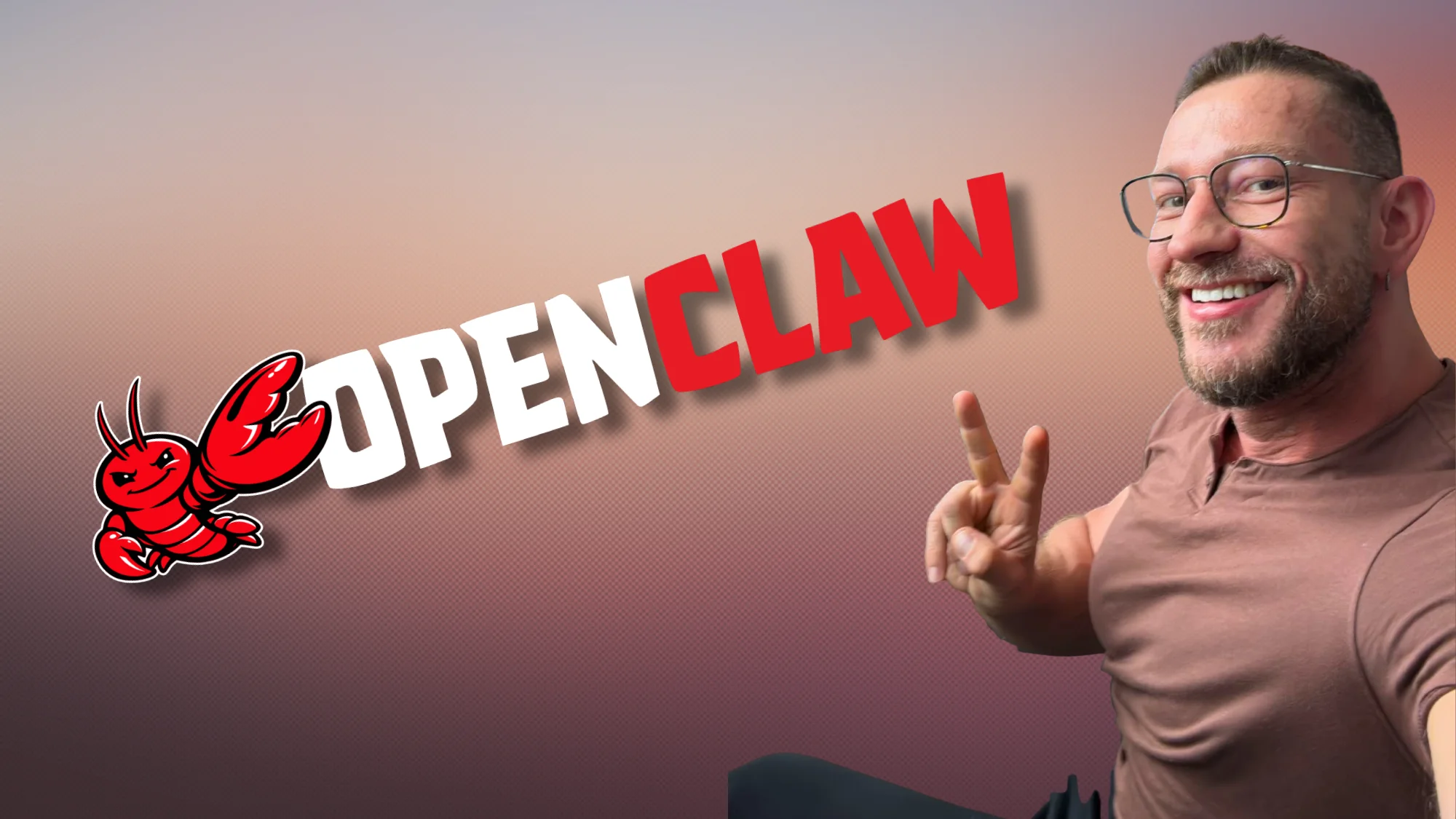
Who Peter Steinberger is and why that matters here
Peter Steinberger is best known as the founder of PSPDFKit, a Vienna-based company that built the PDF SDK powering thousands of enterprise applications on iOS, Android, and web. PSPDFKit is the kind of product you use without knowing you are using it — it is infrastructure that other products rely on, built to be reliable and performant in demanding real-world conditions. That context matters because Steinberger is not an AI evangelist building a demo to attract attention. He is an experienced platform engineer who looked at the current state of AI tooling and decided to build something he actually wanted to use.
He goes by @steipete online and has been an active and thoughtful presence in the iOS developer community for over a decade. His projects tend to be technically serious, well-documented, and built around a genuine problem statement rather than hype-driven feature lists. OpenClaw matches that pattern. It launched in late January 2026, and within the first nineteen days of the project's life, early users were already reporting substantive workflow changes — clearing email backlogs, managing calendar conflicts, writing and running code, and controlling smart home devices, all through a familiar chat interface.
The 'space lobster AI' branding that appears in OpenClaw's documentation is deliberately playful, but the engineering underneath it is not. The project has a proper extension system, persistent memory architecture, and a community of contributors growing around it on GitHub. It is the kind of project that gets taken seriously precisely because it does not try too hard to be taken seriously.
The local AI thesis in detail
The dominant architecture for AI assistants in 2025 and 2026 is cloud-first by strong default. When you interact with ChatGPT, Claude, Gemini, or any of the major consumer AI products, your conversation context, your integrations, and your data all live on the vendor's infrastructure. There are good reasons for this — cloud models are more capable, easier to update, and simpler to deploy across devices. But there are also real costs that rarely get discussed honestly.
The most obvious is privacy. Every document you paste, every email thread you share for context, every meeting transcript you feed to a cloud AI assistant becomes part of a data pipeline you do not fully control. Enterprise AI agreements have improved significantly, but the fundamental dynamic remains: your most sensitive operational context is transiting third-party infrastructure. For a legal team, a finance organization, or any context where data residency has regulatory implications, that is not a theoretical concern.
The less discussed cost is integration depth. Cloud AI assistants connect to your systems through APIs that the vendor has chosen to build and maintain. OpenClaw connects to your systems through the same mechanisms your machine uses natively — local files, direct app integrations, system-level permissions. That gives it a fundamentally different integration surface. It can interact with applications that do not have public APIs, access local state that is never synced to the cloud, and execute workflows that require system-level access rather than OAuth tokens.
Running locally also means you are not dependent on the vendor's infrastructure staying up, not affected by rate limits that throttle cloud services during peak usage, and not paying per-token costs for every interaction with your own local data. For high-frequency workflows, those economics can matter.
- Data stays on your hardware — no third-party backend by default.
- Integrates with apps locally, not just through vendor-approved APIs.
- Works with WhatsApp, Telegram, Discord, Slack as native chat interfaces.
- Manages email, calendar, smart home devices, and code execution.
- Extension system allows custom integrations without touching core code.
Community response and early signals
The early community response to OpenClaw has been notably strong relative to the project's age. Within its first few weeks, user testimonials were describing substantive workflow integration rather than casual experimentation — people clearing large email backlogs, setting up multi-step home automation routines, and having the assistant create its own extensions to handle new task types on the fly. The social amplification around a project of this kind is often a lagging indicator of genuine utility rather than novelty.
The open-source nature of the project also matters for the quality signal it sends. Steinberger released the code publicly from day one, which means the community can inspect the architecture, contribute improvements, and identify issues without waiting for a vendor to respond. That level of transparency is rare in AI tooling and it has attracted contributors who are building integrations that Steinberger himself did not anticipate.
It is worth noting that OpenClaw is still early and carries all the rough edges that implies. The setup process requires comfort with running software locally and configuring integrations. It is not a consumer product in the polished, one-click-install sense that the major cloud assistants are. But the people for whom it is designed — developers and technical users who value control, privacy, and integration depth over convenience — are exactly the people who will tolerate that tradeoff.
What this signals for enterprise and what we are watching
OpenClaw is a personal project, not an enterprise product. Steinberger has been explicit about that framing. But the thesis it embodies — that AI which runs close to your data and your systems is better in important ways than AI that runs far from it — has obvious enterprise implications. Data residency requirements, integration depth with legacy systems, and the cost and security overhead of cloud data pipelines are all enterprise problems that local AI architecture addresses more naturally than cloud-first alternatives.
We are watching whether the quality ceiling on local models improves fast enough to make the capability tradeoff acceptable to enterprise buyers. Right now, running a state-of-the-art model locally requires hardware that most organizations do not have deployed broadly. The gap is closing — smaller, more capable models are being released regularly — but it has not closed enough to make local AI the default enterprise choice yet.
What OpenClaw does today is mark a point on the timeline: the tooling for local agentic AI has crossed a threshold where a single experienced developer can build something genuinely useful in under a month. That threshold will only move in one direction. The enterprise version of this thesis is not far behind.
Source signals